We all know that the corporate world is a complex and dynamic ecosystem where businesses strive to innovate, compete and grow in an ever-changing global market. It’s a realm defined by high-stakes decision-making, intricate strategies, and relentless pursuit of efficiency and profitability. Anyone who is part of this corporate ecosystem is well aware of countless jargons that define every aspect of this ecosystem. It’s easy to adopt terms that simplify communication but inadvertently strip away the human element of our work. One such term is “resources” when referring to employees. I have repeatedly heard this term “resources”. Recently this made me think why do we call our people as resources. While it’s common to hear phrases like “resource allocation” or “resource management,” I feel this language reduces individuals to mere assets—tools to be utilized, optimized, and expended. But in doing so, we risk losing sight of the very essence of what drives a successful business: people. I am not into people management or HR space but a pure technical nerd, however I could not keep myself from thinking about this.
The Problem with term “Resources”: The term “resources” originated in the context of materials and assets—things that can be used up or replaced easily. Things that are material. e.g. Wood is a resource. You use wood to build furniture and whenever you need more you can order more. If you don’t like one type of wood you can easily replace it with another type available in the market. When applied to people, the term “resources” subtly suggests that employees are interchangeable parts, valued only for the output they can generate. They can be used as required to generate the required output. This mindset can lead to a culture where the unique contributions, creativity, and well-being of individuals are overlooked in favor of efficiency and productivity.
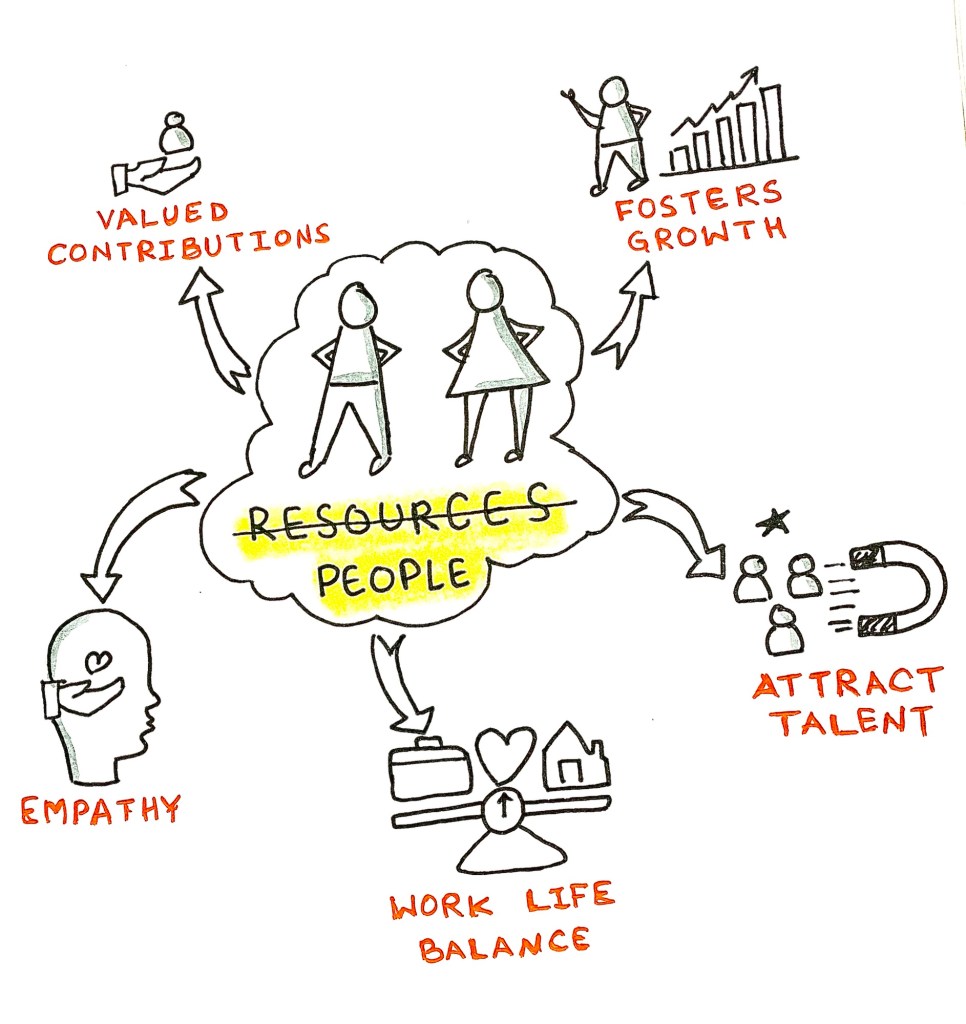
Impact on Workplace Culture: Referring to people as resources can contribute to a depersonalized work environment. It implies that employees are merely cogs in a machine, rather than individuals with distinct skills, aspirations, and emotions. This can erode morale, reduce engagement, and foster a sense of alienation among employees who feel that their personal identity and contributions are not fully recognized or valued.
Why language matters: Language shapes our perceptions and influences our behavior. When we refer to employees as people, it emphasizes their humanity. It reminds us that each individual brings a unique perspective, set of skills, and potential to the table. This shift in language encourages a more empathetic and inclusive approach to management, where the focus is on supporting and nurturing talent rather than simply extracting value. An organization that calls its employees people conveys a strong message that it cares about its employees, that their individual contributions and emotions matter.
Fostering a People-Centric Culture: By consciously choosing to use people-centric language, organizations can foster a culture that prioritizes employee well-being, development, and engagement. This not only improves job satisfaction but also drives better business outcomes. Employees who feel valued as individuals are more likely to be motivated, loyal, and innovative—qualities that are essential for long-term success. It also encompasses creating opportunities for personal and professional growth, encouraging open communication, and promoting work-life balance. This not only enhances the productivity and innovation of the existing employees but also helps to attract and retain top talent.
The Power Of People: At its core, every business is powered by people. It’s their ideas, creativity, and dedication that drive innovation and growth. When we refer to employees as people, we acknowledge the full scope of their contributions, including their emotional and intellectual investments in the company’s success. Recognizing employees as people rather than resources opens the door to greater empowerment and engagement. It encourages management to invest in their development, create opportunities for growth, and involve them in decision-making processes. This, in turn, leads to a more dynamic and resilient workforce, capable of adapting to challenges and driving the company forward.
Moving beyond “resource” management : To truly succeed, organizations must move beyond the idea of “resource” management and embrace people management. This means creating policies and practices that reflect the human side of work—offering flexibility, supporting mental and physical health, providing opportunities for learning and growth, and fostering a sense of community and belonging. Leaders play a crucial role in setting the tone for how employees are perceived and treated within an organization. By leading with empathy and a people-first mindset, leaders can inspire their teams to reach their full potential. This approach not only benefits the individuals involved but also enhances the overall success and reputation of the organization.
 FactorBytes
Leave a comment